
 English
 Spanish
 French
 German
 Italian
 Chinese (Simplified)
 Japanese
 Korean
 Arabic
 Portuguese
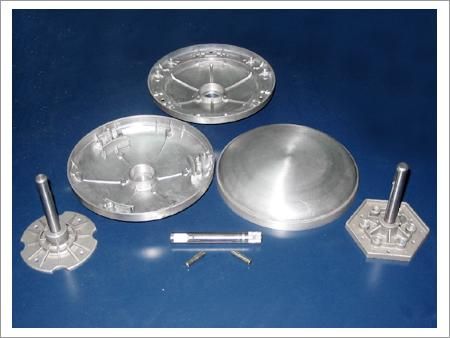
Turned Components
2500 INR/Unit
Product Details:
X
Turned Components Price And Quantity
- 2500 INR/Unit
- 100 Unit
Turned Components Trade Information
- Cheque, Cash in Advance (CID)
- Days
- Yes
- Contact us for information regarding our sample policy
- Standard
- Australia, North America, Western Europe, Africa, Middle East, South America
- All India
Product Description
We are one of the leading manufacturers, exporters and suppliers of supreme quality Turned Components. These components are used in CNC machining setup which helps to develop a fine range of CNC turned components such as turning, boring, grooving and facing. Our offered components are precisely designed and manufactured using high quality raw material with advanced technology. Although, these Turned Components can also customized as per the specifications detailed by the clients.
Features:
- Optimum performance
- Long service life
- High strength
- Corrosion resistance
-
Raw material, such as a rod or block, is chosen based on the component's intended application and properties (e.g., brass for corrosion resistance, steel for strength).
-
The raw material is secured and rotated at high speed by the lathe.
-
A cutting tool is brought to the rotating workpiece, removing excess material to gradually form the desired shape, size, and surface finish.
-
The tool moves parallel to the rotating workpiece to create cylindrical shapes, and can also be used to cut threads or other features.
-
Modern turning often uses Computer Numerical Control (CNC) machines to ensure high accuracy, consistent quality, and the ability to produce complex geometries and intricate designs.
-
Components are manufactured to meet exact specifications and very tight tolerances.
-
The process can create a wide variety of shapes, from simple shafts to complex, multi-featured parts.
-
A diverse array of materials, including metals, plastics, and composites, can be used.
-
Achieves fine details and excellent surface finishes, ensuring reliability in demanding applications.
-
CNC turning allows for high-volume production with consistent quality and low material waste.
-
The core method is turning, where a raw material (workpiece) is held and rotated by a lathe.
-
A cutting tool, often computer-controlled (CNC), removes excess material as the workpiece spins, shaping it into the desired form.
-
This process allows for the creation of complex shapes and geometries with exceptional accuracy and the ability to maintain tight tolerances.
-
The nature of the turning process naturally results in rotationally symmetrical, often cylindrical, parts.
-
Components are engineered to meet exact specifications and tight tolerances for reliable functionality.
-
They can be made from a wide variety of materials, including various metals, plastics, and composites.
- Aerospace: Essential for parts requiring high reliability and precision.
- Automotive: Used in components for vehicles, ensuring performance and durability.
- Electronics: Required for detailed electrical and electronic parts.
- Medical Devices: Used where precision and biocompatibility are critical.
- Machinery: Integral to hydraulic systems, pneumatic systems, and other industrial machinery.
Turned components are meticulously crafted mechanical or electronic parts formed by the turning process, where a rotating workpiece is shaped by a cutting tool to achieve specific dimensions and forms, typically cylindrical in shape. This precision machining method, often performed on lathes, produces high-quality, intricate parts with tight tolerances for various industries, including aerospace, automotive, electronics, and medical devices. Common examples include shafts, bushings, and connectors, made from metals like brass, steel, and aluminum, or even plastics.
The Turning Process
Key Characteristics

How Turned Components Are Made
Key Characteristics
Common Applications
Tell us about your requirement

Price:
Quantity
Select Unit
- 50
- 100
- 200
- 250
- 500
- 1000+
Additional detail
Mobile number
Email


SHAKTI HITECH COMPONENTS PVT. LTD.
GST : 06AAKCS2835C2ZI
GST : 06AAKCS2835C2ZI


 Send Inquiry
Plot no 701, Sector -69 IMT, Faridabad - 121006, Haryana, India
SHAKTI HITECH COMPONENTS PVT. LTD.
All Rights Reserved.(Terms of Use)
Developed and Managed by Infocom Network Private Limited.
Developed and Managed by Infocom Network Private Limited.

